Storm & Hail Damage Roof Repair in CT.
Adjuster-Ready Documentation.
Wind-lifted shingles, hail bruising, tree-limb impact, ice dam back-flow. Photo-documented inspection, written scope built for insurance claims, 1-year leak warranty on the repair.
Book storm assessment →Schedule storm damage assessment
Book your slot. We document. You claim.
Choose “Repair”, address, photos. We arrive with cameras, ladder, and the right pricing tiers.
Get Your Roof Quote
Replacement or repair · 60 seconds · No phone tag
What can we help with?
Licensed CT HIC.0703927 · Fully insured · No phone tag
Storm damage patterns
Six damage types we see most in Connecticut.
Knowing which one you have changes both the repair scope and the insurance conversation.
Wind-lifted shingles
Most common CT storm damage. The seal strip releases under wind shear, the shingle flaps for one or two more events, then leaves the roof. IBHS testing shows that proper nail placement matters more than shingle wind rating in events under 120 mph.
Hail bruising
Round depressions where granules were knocked off. Small hail under an inch can still bruise the mat — IBHS research has updated industry assumptions about hail damage thresholds.
Tree-limb impact
Branches puncture decking, tear shingles, and bend flashing. Common after ice storms in Litchfield and Tolland counties where mature trees overhang houses.
Ice dam back-flow
Late-winter damage. Water dammed at the eaves backs up under the shingle line and into the deck. Repairs happen in spring once the deck dries.
Ridge cap damage
Ridge caps take the highest wind exposure on the entire roof. First thing to lift in a sustained gust event.
Flashing displacement
High wind can shift chimney counterflashing and pull skylight perimeter flashing. Often missed in a visual-only check.
Hail and wind damage research: Insurance Institute for Business & Home Safety.
Insurance, in plain terms
How a storm claim usually goes in CT.
We are not public adjusters, and we don't bill insurance directly. What we do is hand you a claim packet that makes the adjuster's job easier — which almost always speeds the payout.
Step 1. Document while it's fresh. Photos from the ground (don't climb), interior stains, dated weather data. The fresher the timeline, the cleaner the claim.
Step 2. Book our assessment. We climb the roof, photograph every damaged area with reference markers and date stamps, and identify each failure mode. Wind versus age. Hail versus aging granule loss. Tree impact versus a botched prior repair. Adjusters appreciate this level of separation.
Step 3. Tarp if needed for mitigation. CT policies typically reimburse reasonable mitigation expenses.
Step 4. File the claim with your insurer. Most carriers send their own adjuster within a few days; we're happy to meet them at the property if you ask us to.
Step 5. Once the claim is settled, we schedule the permanent repair. The scope matches what was documented.
One blunt note: be wary of any out-of-state roofer who shows up at your door after a CT storm and offers to “handle the insurance.” Connecticut requires a Home Improvement Contractor registration. Verify any contractor at the CT Department of Consumer Protection before signing anything. Trust Proof Roofing's HIC is HIC.0703927.
Storm repair pricing
Same tiers, storm event or not.
No storm-chaser surcharge. Published pricing applies whether you found us before or after the event.
Trust Proof Roofing — published
$400–$600
Small repair (isolated wind/hail, one slope).
$800–$1,300
Big repair (multiple slopes or wider damage).
Full replacement quotes available when damage exceeds repair scope.
Typical Northeast roof replacement
$9,000–$18,000
Range varies by size, pitch, and material. Northeast pricing typically runs ~15% above the national average.
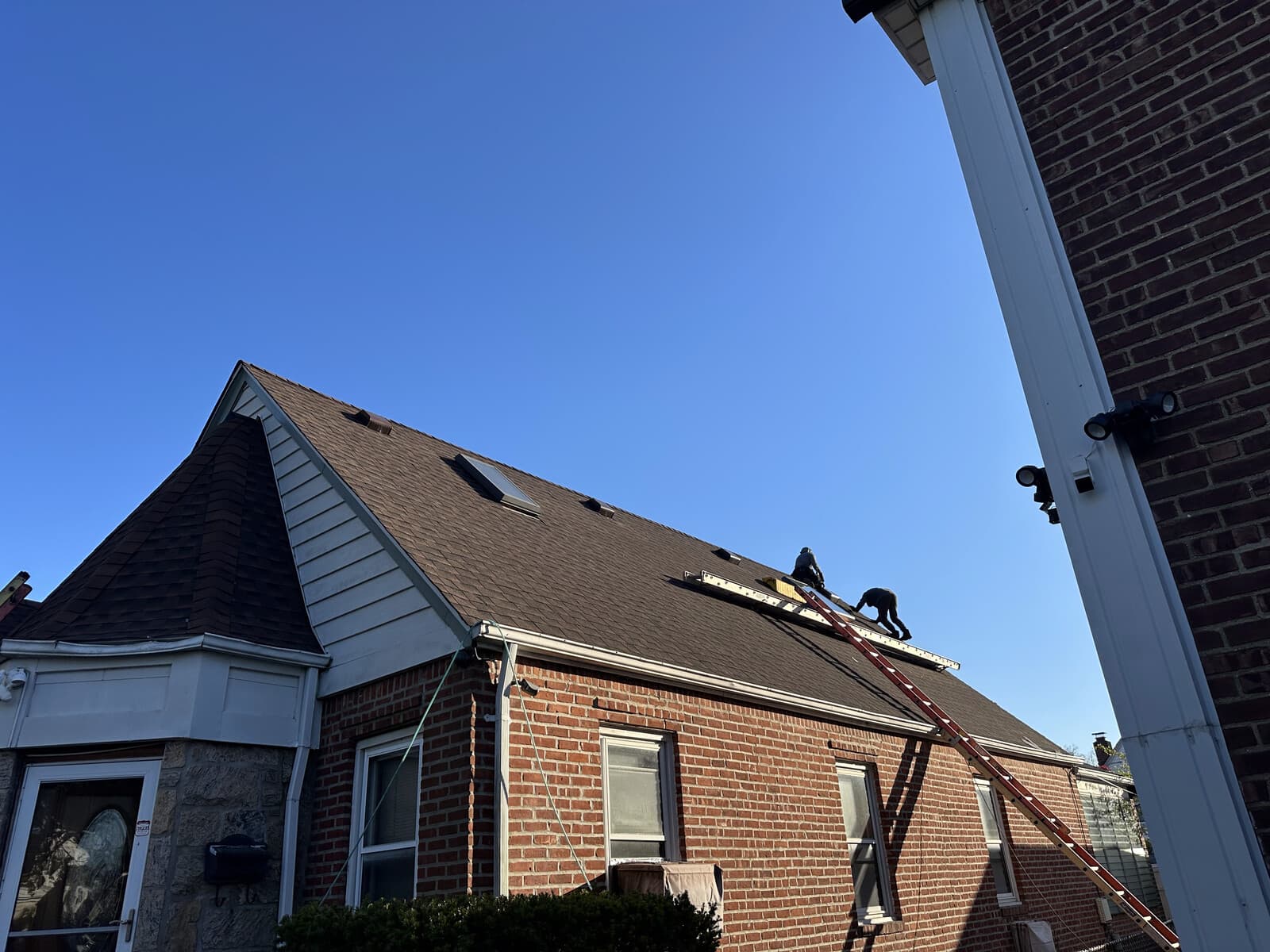
Post-storm assessment
Brick colonial · CT crew documenting damage
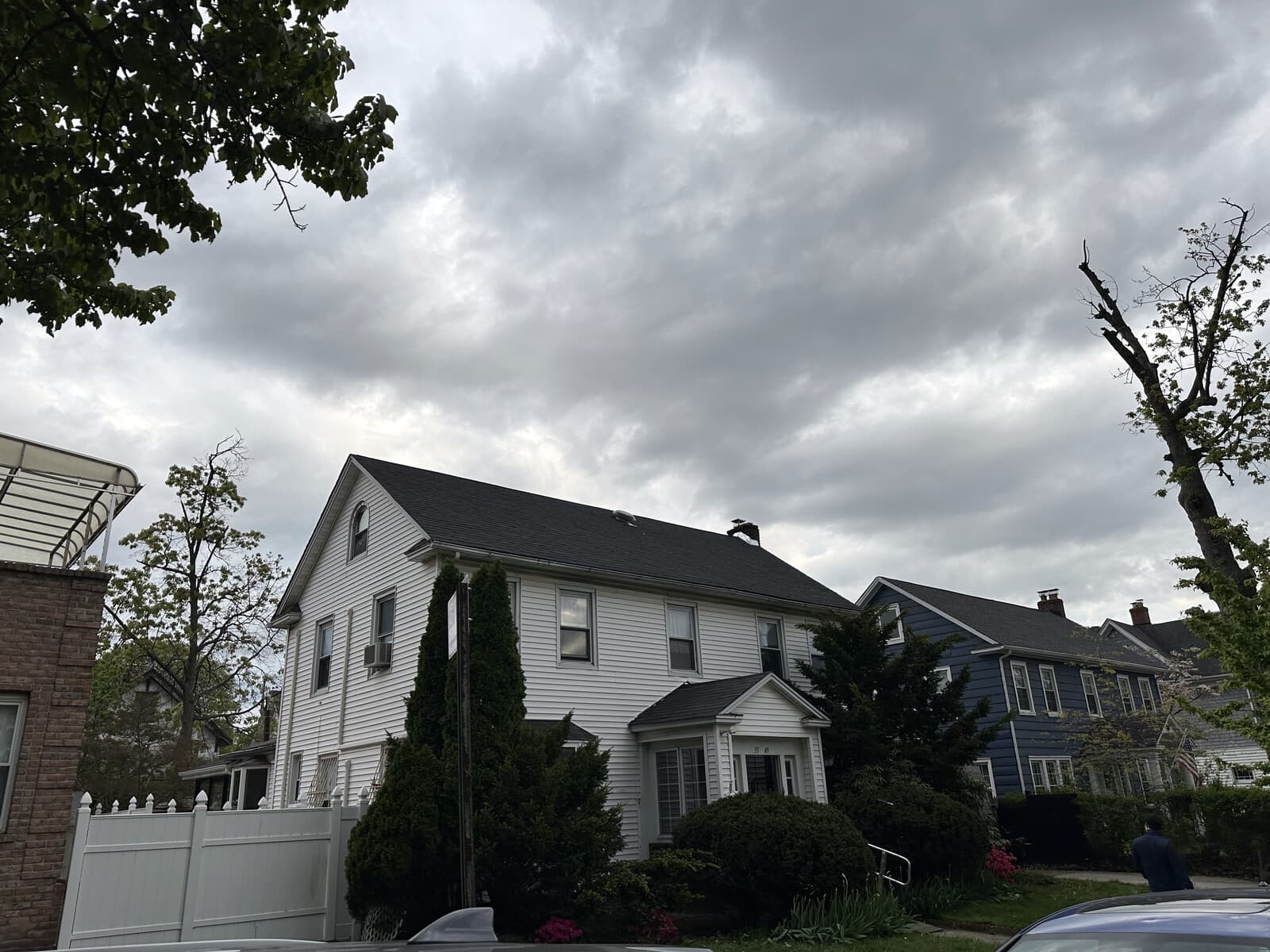
Completed replacement, post-storm
When repair scope crossed into replacement
Local weather context
Why Connecticut roofs take a beating.
Three weather realities drive storm calls in CT. Spring brings nor'easters running up the coast with sustained 40–60 mph winds and gusts well above 70. Summer adds microburst events — short, intense, very localized — that can drop a half-inch hail load on a single neighborhood and leave the next town untouched. Late winter brings the ice dam cycle, when meltwater from a warm-roof January thaws toward a cold eave, refreezes, and starts the back-flow process.
The Insurance Institute for Business & Home Safety FORTIFIED standard exists because conventional asphalt-shingle assemblies underperform in the kinds of repeated, sub-extreme events the Northeast specializes in. Their research consistently points to ring-shank nailing, sealed deck assemblies, and reinforced edges as the highest-ROI upgrades. We bring those details into every replacement we touch; on a repair, we bring them into the patched area where we can.
CT changed its building code in 2018 to require ice-and-water shield above living spaces in most assemblies. Roofs installed before that are statistically more vulnerable to ice-dam events — useful to know when you're reading an adjuster's notes on a leak.
Common questions
Storm damage repair, answered.
How do I know if my roof has storm damage?
From the ground, look for missing shingles, granules pooled at downspout splash blocks, lifted or curled tabs especially along ridges and rakes, and any visible bare spots. Don't climb up — IBHS recommends documenting from ground level. Inside, check the attic during the next dry daylight hour for fresh water trails along the underside of the deck. If anything looks off after a wind event over roughly 50 mph or a hail event, book an inspection.
Will my homeowners insurance pay for storm damage repair?
Sudden, accidental damage from a covered peril — wind, hail, falling trees from a covered weather event — is typically covered by Connecticut homeowners policies. The line that insurers draw is between storm damage (covered) and wear-and-tear (not covered). Our written assessment is built to support a claim: date-stamped photos, cause-of-damage notes, and a line-item repair scope. We do not deal with the insurer for you, but we hand you everything an adjuster needs.
What does hail actually do to a roof?
Hail bruises the mat of an asphalt shingle. The visible signal is a small round depression where the granules have been knocked free, exposing the black mat below. Larger hail can crack the mat outright. The shingle keeps working short-term — water still sheds — but the protective granule layer is the UV barrier, so a hail-damaged shingle ages much faster than an undamaged one. Per IBHS research, even small hail can cause more damage than previously assumed, which is why a professional assessment after any hail event is worth doing.
How fast can you assess storm damage?
In an active storm season we run extra slots for assessments. Most homeowners can book a same-week window through our intake form. Submit the form, choose "Repair," include photos if you have them, and we lock the slot at submit. After major regional events we add capacity but assessment lead times can stretch — early callers get the earliest slots.
Do you tarp the roof while I work with my insurance company?
Yes. CT homeowners policies typically include a "Duty to Mitigate" clause requiring you to take reasonable action to stop further damage. Emergency tarping is reimbursable under that clause. We tarp on the assessment visit when conditions and pitch allow, give you a written mitigation invoice for your claim, and schedule the permanent repair once the adjuster has signed off.
What if my insurance approves replacement instead of repair?
When damage is widespread enough, an adjuster will approve a full replacement. We do those too — see our roof replacement page. Most CT replacements run $9,000–$18,000 depending on size and pitch per CT-specific 2026 cost data, and we provide the same photo-documented, written-scope approach.
How much does storm damage repair cost in Connecticut?
Trust Proof pricing for CT storm damage: $400–$600 for small repair (isolated wind-lifted shingles, one slope), $800–$1,300 for big repair (multiple slopes or wider damage), $300/hr plus materials for anything outside those tiers. $400 minimum, $500 if your home is more than 50 miles from Hartford. Hail damage repair specifically can run higher when widespread bruising is documented and full slope replacement is involved.
Are you licensed and insured?
Yes. CT Home Improvement Contractor license HIC.0703927. Full general liability insurance. Verify any CT roofer at the CT Department of Consumer Protection before work begins — and avoid storm-chaser out-of-state contractors who knock on doors after weather events.
Active leak, no time to wait for insurance? Emergency roof repair →
Need a temporary cover before the adjuster arrives? Temporary roof tarping in CT →
Adjuster says replacement? Roof replacement in Connecticut →
Book your storm damage assessment.
Documented for insurance. Repaired with a 1-year leak warranty.